
Alright, let’s see where this goes…
(Best experienced with earphones)
Enjoy!
Alright, let’s see where this goes…
(Best experienced with earphones)
Enjoy!
The first time I heard about jiu-jitsu, the thought of having strange sweaty blokes grinding up against and sitting on my face didn’t really appeal to me. This was back when I didn’t really have an understanding of the art.
In 2015, I went to Chiang Mai to train Muay Thai. It was there that I developed appreciation and understanding of martial arts grew. After a close blue belt friend of mine brought me in for a jiu-jitsu class, the rest, as they say, was history.
To those who’ve decided to take the plunge and start training jiu-jitsu as well, here are some essential tips to help you get started on your new journey.
. . .
Jiu-jitsu 101
Jiū in Japanese literally translates to ‘gentleness’, while jitsu means ‘art’ or ‘technique’. Hence the term, ‘gentle art’.
Samurai were taught this weaponless self-defence as a form of takedown since strikes and punches were useless against the heavy armour their enemies wore.
Jiu-jitsu later made it’s way to Brazil, where the art was further developed and evolved into the discipline we see today.
What’s a class like?
Most classes start out in the same way, with a quick run around the gym, a few hip escapes, followed by some simple drills and rolling exercises.
If you’re new, your coach might pull you aside and give you a quick breakdown of the practice before diving into the techniques of the day—followed by more rolling after.
Rolling for the first time
As a white belt, your only goal is to survive.
Forget about trying to submit your opponent (not that you even know how to…) and focus on these two things:
Master these two aspects and you’ll be well on your way to becoming a decent jiu-jitsu practitioner. Until then, set aside your ego, give your opponent a fist bump, and let the ass whooping commence!
. . .
Picking a gym
Selecting your gym of choice bases a lot on personal preference. Everyone has their own set of criteria, but what’s important is finding an academy that best fits you. Aside from overall good vibes, here are some additional factors to consider before committing:
Gym cleanliness
Observe the hygiene practices (or lack thereof) of the gym. Are the toilets and changing rooms well maintained? Do the mats get mopped up after a class? Or is everything caked in sweat and dried blood?
Good hygiene is an essential practice every gym should adhere. Unless you’re looking to get a staph infection, it’s best to give dirty gyms a miss.
Mat space
Imagine having 30 people rolling around in an area the size of your living room. The lack of space can get pretty annoying when you’re constantly bumping into people every few seconds and breaking the momentum of your rolls. There’s also a chance you might get you kicked in the face by accident, which is mucho un-coolio.
Location, location, location
Pick a gym that’s close to your job or home. Distance may not seem like an issue for you now, but trust me, if you’re training constantly, have a full-time job, and don’t have your own transport, travelling back and forth becomes a huge pain and kills your motivation to keep training.
Friendliness of students
The jiu-jitsu community is a very close-knit circle. Training more than three times a week means you’ll be spending a lot of time in close physical contact with these people and trusting that they’re watching out for your safety. It helps to be chummy with people there and makes rolling that much more enjoyable.
Overall teaching ability
Some instructors are more patient and nurturing, while others tend to be regimental and assertive. Though both methods are equally effective teaching styles, what’s imperative to your progression as a jiu-jitsu practitioner is finding the style which best suits you.
Ask yourself this…
Don’t be afraid to visit different gyms to get a feel of their culture and teaching styles. Most schools offer free trial classes and introductory lessons for free, so don’t feel the need to rush into anything.
. . .
Getting a gi
How many gis should you get?
How often will you be training? If you’re a casual once-a-week roller, a single gi would be enough. If you’re thinking of hitting the mats 4-5 times a week, get at least two.
What about rash guards?
Your elbows and knees are going to get scuffed a lot during your rolling sessions. Unless you’re okay with a little friction burn, I’d recommend purchasing some rash guards to make things more comfortable.
The biggest issue most people have about wearing them in Singapore is how warm it’s going to feel. Thing is, most jiu-jitsu gyms are air-conditioned and I’d rather be sweaty than chaffed up, so it’s really up to you.
The art of finger taping
The first few times you start rolling, you’re going to be using a lot of strength, yanking and gripping and clinging onto your opponent’s gi like your life depended on it.
Here’s the thing… if you’re using a lot of strength, you’re probably doing something wrong. It’s all about technique when it comes to the ‘jits’. Until you learn that, do those digits a favour and wrap them up.
Regular medical tape from any pharmaceutical store does the trick. They’re about a dollar a pop and comes in a variety of sizes—the smallest being half an inch. (I like to slice a 1/2 inch down the middle to make it 1/4 inch, it makes taping easier.) Make it a habit to tape up before each class. Never wrap it too tightly till your fingers start throbbing, and don’t be afraid to use a lot of it.
. . .
Nutrition and supplementation
The first few weeks of training are going to hurt. Your body is going to need time to condition itself after a long day of training. It’s important to maintain a healthy and clean diet, and consider taking these natural supplements to give yourself that extra boost for recovery.
Fish Oil
Omega-3 fatty acids found in fish oil helps build muscle, keeps your bones and joints strong, and above all reduces inflammation, which is going to be the main cause for most of your injuries and prevents you from getting a bunch deadly diseases.
Definitely take it if want to live a long and healthy life.
Turmeric
Or rather, the active ingredient in turmeric: Curcumin. That’s right. That yellow stuff you use for cooking curry has got some awesome anti-inflammatory effects. You can purchase turmeric supplements from any organic supermarket, or do what I do and make them yourself with empty capsules and turmeric powder to save yourself a couple of dollars.
Vitamin C
A powerful antioxidant best known for maintaining a strong immune system and a healthy heart. A single effervescent tablet in the morning adds another layer of defence against the common cold and falling sick.
Chia Seeds
I’m talking about those little tadpoles things that float around your mouth. Add them to any beverages to make drinking fun! They’re loaded with antioxidants, fibre, and omega-3 fatty acids, all of which are A-okay for consumption.
Coconut Oil
This superfood has one of the richest sources of natural saturated fats known to man. Drizzle a spoonful over your salad or add it to your morning brew to boosts your immune system and overall endurance. It also reduces inflammation, prevents cancer, and does wonders for your skin and hair.
Other possible supplements you could try include:
Creatine, BCAA, and Whey Protein. I personally don’t use them as much, but as long as you eat your greens and limiting salt, sugar, and alcohol intake, that’s enough to keep you from feeling like shit after a long week of training.
. . .
Important tips for beginners
Relax and breathe
If you haven’t realised by now, muscling your way to a submission isn’t going to work. Constantly going at 100% will gas you out within minutes. The solution? Stay cool. You don’t see chess players screaming and slamming their pieces onto the board do you? Jiu-jitsu is a game of wits, an art of flow. Just chill out and go slow, you’ll learn much better that way. Trust me.
Tap early. Tap loudly. Tap often.
You’re going to get dominated during the first few months of training. Which means you’ll be tapping out a lot as well. It’s not worth breaking an arm and being out of training for six months just because you can’t tame your ego. So check yourself before you wreck yourself.
Keep a jiu-jitsu journal
Jot down points, draw diagrams, use acronyms for certain moves (e.g. SG—Side guard, CG—Closed guard, etc.), or even create a flowchart. Basically just write down anything and everything you’ve learned during class in whichever way you’re most comfortable with so you can learn and refer to it later. Dating your entries helps make it easier to keep track of your progress as well.
Roll with someone more experienced
White belts are dangerous. Not because they’re skilled, but because half the time they don’t know what the hell they’re doing and end up using more strength to compensate for their lack of technique, which could end up getting you hurt.
Don’t be intimidated to roll with a blue belt or higher. Most experienced practitioners are more than happy to give you some pointers and highlight what you’re doing wrong. Just go up to one and ask if they’d like to roll. You’ll feel much safer in their hands as well cause you know they’re more aware of their moves.
Listen to the Joe Rogan podcast
Each podcast from The Joe Rogan Experience (JRE) podcast, hosted by UFC commentator and stand-up comedian (and ex-host of Fear Factor) Joe Rogan, is about three hours long and features a variety of guests ranging from MMA fighters, BJJ masters, scientists, comedians, bow hunters… (basically anyone who’s a super cool person), to share their personal stories along with interesting and insightful ways to conduct our own lives. Even if you’re not into jiu-jitsu, I recommend listening to the podcast anyway.
And the final tip:
Never stop drilling
Mastering anything involves time, patience, and a lot of experimentation. Don’t worry about trying to submit your opponent just yet, focus on perfecting the fundamentals. Drill the basics till they become second nature, and then drill some more. You’ll be choking out your opponents in no time at all.
That’s it!
Let me know if you have any useful rolling tips or practices worth sharing, I’ll be sure to include them in a future article. Till then, peace out.
As much as I’d like to bring the pain and bad memories of the previous year forward, it’s time to bury that hatchet and move on. 2016’s the year to quit messing around and start getting your shit in together.
Here are five of my 2016 New Year resolutions I’d like to see accomplish by year’s end:
1. Read a book a week
Being a notoriously slow reader, completing only a book a month isn’t gonna cut it for 2016. I’m putting my reading habits to the test this year in the hopes of knocking off more books than I put in from my to-read list.
I’ve taken inspiration from Amy McLay Paterson’s article and started a spreadsheet of my own here for anyone who wants to see my progress.
2. Get ripped
I’m closing in to my 30s and if I’m ever going to achieve the ‘George Clooney’ or ‘Daniel Craig’-look when I hit my 50s then now’s a good a time as any to start making those little changes to maintaining a healthy lifestyle. Aside from regular exercise, cutting down on sugar and upping my vegetable game are also part of the plan.
3. Be able to do the splits
I dabble a little in yoga and Muay Thai to know that being able to perform the splits not only improves your body’s overall flexibility, the stretching exercises involved can also help with chronic pains. Not to mention it looks ridiculously cool.
4. Wear more shirts
It’s one of those things that I’ve just decided to start doing simply because—like flossing or making the bed. These “adult chores” help get a kind of routine going for me and I’m hoping to develop more of these good habits over time, starting by looking dapper as fuck.
5. Blog at least once a month
It’s all about time management and prioritising what’s important. Everyone’s got their own commitments and individual schedules to worry about and ‘not having enough time’ is just another trite excuse for being lazy. I’m hoping to make more out of my time so expect to see at least 11 more posts this year, starting with this.
Ready, steady, go.
I’ve found a new way to put myself in danger—Antarctica, the coldest, driest, and windiest continent on earth.
I recently participated in the Oceanwide Expeditions Antarctica Contest. An online travel competition, with the first prize being a 30-day cruise trip to one of the most spectacular Antarctic journey ever: the Ross Sea (with helicopters).
Check it: 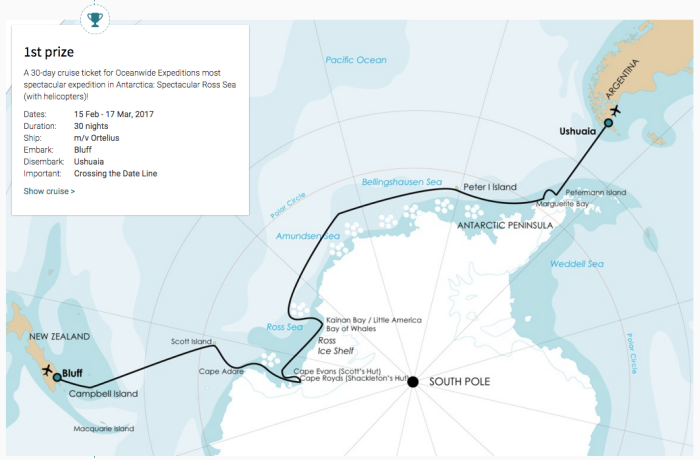
This is where I’ll need your help Internet, to get me on that choppa and send me to Antarctica!
Help a fellow traveller out by voting for me here and find out more details about the contest and my entry in the link.
I’ll leave you with this incredible video shot by Kalle Ljung of this icebound desert.
You won’t be able to sleep…
Even though you’re training twice a day for six days a week at such intensity, you would still find yourself wide awake in the middle of the night and it’s the strangest thing.
My body is exhausted. I know this cause my body knows this. It tells me through the pain in my feet and the soreness in my neck. It hurts to get up, it hurts to lie down. It hurts to laugh, to breathe (even to brush my teeth in the morning).
We often talk about it during dinner and discuss theories of this strange phenomenon.
Could it be the difference in timezones?
Perhaps it’s the food.
Maybe it’s the intensity of the training. But shouldn’t exercise aid you in sleep?
We don’t know, we’re tired.
I would be laying on my bed and my shoulders would jerk out involuntarily from throwing punches all day—courtesy of muscle memory. But when we finally did fall asleep, our dreams took on a whole new reality, creating far more vivid and lucid images that our subconscious mind could barely comprehend.
I had a one such dream the other night; I can’t remember what it was. It was four in the morning and I burned from the heat of the night in the dark room of the camp. I awoke, fearful and in doubt of every decision I had ever made. I questioned everything I had ever done in life from birth up till this moment. A million thoughts raced through my mind and in that moment of confusion and vulnerability came clarity of the highest condition.
In that moment, I understood everything.
That true joy and understanding do not come from comfort and safety; they come from epiphany born in exhaustion (and not exhaustion for its own sake). That nothing in this world is worth having or doing unless there is pain and difficulty and that there are some things in this world you simply must fight for to preserve.

Remember in that movie “Up in the Air”, when George Clooney gave that speech about backpacks and asked us all “How much does your life weigh“?
That was a great scene and what he said was right; moving is living.
And having more material stuff will only end up weighing us down.
“The slower we move, the faster we die,” and learning to declutter ourselves from our worldly possession is an important discipline to master when it comes to travel.
There’s definitely some skill and tact required to live such a minimalistic lifestyle. I’ve embraced the ‘carry-on’ culture for years now and I’m constantly challenging myself to go even lighter.
When I trekked Everest Base Camp in 2014, my backpack weighed about 8 kg and even then I felt it could have been lighter. There’s a certain sense of liberation to be had from carrying such a light load and I often relished in my own mobility.
My pack for the next few months weighs a total of 6 kg:
5 kg backpack and 1 kg Dive bag.

I love the SAF’s utility bags. They’re cheap, durable, and you wouldn’t think twice about strapping it to the top of a dirty bus or a moving train. The army market at the Golden Mile Food Centre is a backpacker’s haven for travel supplies and other knick-knacks you’ll need for the road. I always make it a point to head down to pick up any last minute items before a big trip.
Here’s a look of some of the things I’ll be taking with me to Thailand:

Clothing
Footwear
Tech
Supplements
Med Kit
And that’s about it.
Other miscellaneous items include toiletries (the usual soap, shampoo, toothpaste,etc.) which don’t need much mentioning. Sunscreen, lotions, insect repellant, and maybe a good book for the flight and long train/bus rides. I intend to buy everything else that I’ll need over there, including my training gear (Gloves, Hand wraps, Mouth/Shin guards, etc.) so I’ve left some empty room in my backpack for those as well.
The trick is to get rid of that inner voice inside you that keeps asking, “Do I need this?”.
90% of the time you won’t, and on the off-chance that you do need it, you could always borrow or just buy it.
I mean, do you really need that hair dryer and curler? And for goodness sake, only wankers bring their ukuleles with them, leave that shit at home.
Severely out of touch (with writing) but hoping to revive this lifeless blog with stories from my upcoming trip. With my last entry being almost three years ago, it would be impossible to summarise everything that’s happened since.
But amidst all the trials and tribulations life has brought forth, travel has been the only constant.
I can find no better reason to start writing again than for that sake.
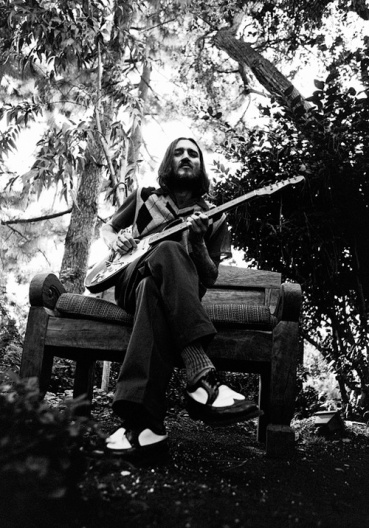
“I don’t need to take drugs. I feel so much more high all the time right now because of the type of momentum that a person can get going when you really dedicate yourself to something that you really love. I don’t even consider doing them, they’re completely silly. Between my dedication to trying to constantly be a better musician and eating my health foods and doing yoga, I feel so much more high than I did for the last few years of doing drugs.
At this point I’m the happiest person in the world. These things do not fuck with me at all, and I’m so proud of that—you don’t know how proud I am. It’s such a beautiful thing to be able to face life, to face yourself, without hiding behind drugs; without having to have anger towards people who love you. There are people who are scared of losing stuff, but you don’t lose anything for any other reason than if you just give up on yourself.”
― John Frusciante, Red Hot Chilli Peppers
Don’t do drugs kids.
I took up a conversation with a gorgeous country girl wearing a low-cut cotton blouse that displayed the beautiful sun-tan on her breast tops.
She was dull.
She spoke of evenings in the country making popcorn on the porch. Once this would have gladdened my heart but because her heart was not glad when she said it I knew there was nothing in it but the idea of what one should do.
“And what else do you do for fun?” I tried to bring up boy friends and sex. Her great dark eyes surveyed me with emptiness and a kind of chagrin that reached back generations and generations in her blood from not having done what was crying to be done — whatever it was, and everybody knows what it was.
“What do you want out of life?”
I wanted to take her and wring it out of her.
She didn’t have the slightest idea what she wanted.
She mumbled of jobs, movies, going to her grandmother’s for the summer, wishing she could go to New York and visit the Roxy, what kind of outfit she would wear — something like the one she wore last Easter, white bonnet, roses, rose pumps, and lavender gabardine coat.
“What do you do on Sunday afternoons?” I asked.
She sat on her porch. The boys went by on bicycles and stopped to chat. She read the funny papers, she reclined on the hammock.
“What do you do on a warm summer’s night?”
She sat on the porch, she watched the cars in the road. She and her mother made popcorn.
“What does your father do on a summer’s night?”
He works, he has an all-night shift at the boiler factory, he’s spent his whole life supporting a woman and her outpoppings and no credit or adoration.
“What does your brother do on a summer’s night?”
He rides around on his bicycle, he hangs out in front of the soda fountain.
“What is he aching to do? What are we all aching to do? What do we want?”
She didn’t know. She yawned. She was sleepy. It was too much. Nobody could tell. Nobody would ever tell.
It was all over.
–On the Road by Jack Kerouac
I can’t even begin to describe the events of these past few days…
The moment I landed in Bangkok I was immediately seduced with change. The thrill of being in a new place was simply invigorating.
Each day was a unique challenge. Not knowing the possibilities of what tomorrow would bring, to venture head first into the unknown of a strange land were everyday was an adventure waiting for us. The thought of that drove me mad with possibilities.
I felt so alive…
What worried me was when I came back…
Everything felt like a dream, like it never even happened. I was desperately fighting routine and loosing. I found myself reverting back to the overbearing cavalier drone that I so very much despised. I began harboring the insolence of the many & committed crimes of ignorance to things to which I did not understand.
I wasn’t feeling very alive anymore at this point…
I met a man from my travels that once told me he’d lived in many different parts of the world through out the different stages of his life and I asked him…
“Don’t you ever miss home? Don’t you ever wanna go back?”
He told me at first he’d return once every few months, see the family & friends.. then he’d go back once a year, then maybe once every 2 or 3 years.. and eventually he realized that there was nothing left for him back there anymore…
His life was wherever whatever adventures took him to.
He was living the dream..
He was free…
Many people have told me to snap out of it. That its merely frivolous thinking & nothing more. “Frog in a well…”, I’d tell them. “Your a frog in a well.” The conceited will never understand how big the world is and how small you are and your insignificant first world problems in comparison to the plights of others.
I’m glad to have experienced the unconventional and there are times when I’ve questioned and even disobeyed in the name of deviance for if I’d allowed myself to follow the rules, I’d never have gotten anywhere.
The struggle to be an individual has never been easy… Have you ever heard of a Greek philosopher named Epictetus? He was a funny man with a certain flare for life. He’d compared people who “fit in” to the white threads of their toga… Indistinguishable.
He wanted to be the purple thread.
“That small part which is bright, and makes all the rest appear graceful and beautiful. Why then…”, he asked, “do you tell me to make myself like the many? And if I do, how shall I still be purple?”
 The Casual Adventurer